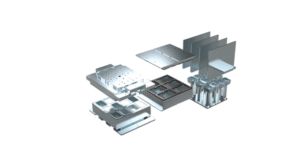
What is 3 Station Tooling?
Typical stations in a 3 Station Tooling setup include:
- Loading or Material Preparation Station – where raw material or components are prepared or inserted into the tool.
- Processing or Forming Station – where the actual shaping, molding, or assembly occurs.
- Finishing or Ejection Station – where the completed product is cooled, trimmed, or ejected.
This three-phase rotation keeps production in constant motion, increasing throughput and ensuring consistent product quality.
Industries Using 3 Station Tooling
- Footwear manufacturing (EVA, rubber, or PVC soles)
- Automotive parts production
- Consumer goods manufacturing
- Medical device production
- Industrial plastics and rubber goods
For instance, in the footwear sector, 3 Station Tooling allows manufacturers to produce shoe soles efficiently by simultaneously loading, molding, and cooling different molds—cutting production times dramatically.
Advantages of 3 Station Tooling
1. Higher Efficiency and Output
Because all three stations work simultaneously, 3 Station Tooling keeps the machine running continuously. While one station loads material, another processes it, and the third handles finishing—resulting in minimal downtime and faster cycles.
2. Cost Reduction
This tooling system helps reduce operational costs by saving labor, energy, and time. The automation within a 3 Station Tooling setup also decreases the likelihood of human errors, which further lowers waste and rework costs.
3. Improved Product Consistency
With dedicated stations handling specific steps, 3 Station Tooling ensures each product is processed under controlled conditions, leading to uniform quality and fewer defects.
4. Space-Saving Design
Instead of requiring multiple separate machines for different steps, a 3 Station Tooling system consolidates the process into one streamlined unit, conserving valuable factory floor space.
5. Flexibility for Customization
Companies can design custom 3 Station Tooling to match their product requirements, allowing for flexibility in production and easy adaptation to new product lines.
- Station 1 – Loading or Preparation: Raw materials or parts are loaded into the mold or tool cavity. Depending on the setup, this step can be automated or semi-automated.
- Station 2 – Processing/Forming: The tool shapes, molds, or assembles the material using heat, pressure, or mechanical force.
- Station 3 – Cooling/Ejection: The final product is cooled, solidified, and safely ejected, ready for inspection or packaging.
The cycle then repeats, ensuring a constant production flow with minimal interruptions.
Maintenance and Best Practices
Like any precision manufacturing tool, 3 Station Tooling requires regular maintenance to ensure optimal performance. Key practices include:
- Cleaning the tooling after each production run
- Inspecting for wear and replacing damaged parts promptly
- Monitoring temperature, pressure, and alignment for accuracy
- Lubricating moving components to prevent friction-related damage
By implementing these best practices, manufacturers can extend the lifespan of their tooling and maintain consistent quality.
Why Invest in 3 Station Tooling?
For companies aiming to improve productivity and reduce costs, 3 Station Tooling represents a smart investment. Its ability to streamline operations, enhance product consistency, and lower long-term operational costs makes it ideal for industries focused on scalability and innovation.
Conclusion