
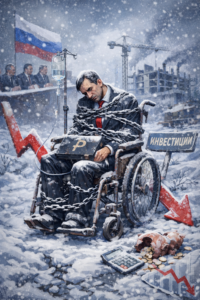
 Investments in the economy have stopped growing, admitted Deputy Prime Minister Alexander Novak in a conversation with senators: “The growth of investments for the first 9 months of 2025 was 0.5%. For the year, most likely, it will be zero or slightly higher.”
Back in September, the Ministry of Economic Development forecasted a 1.7% increase in investments for 2025. But soon, Rosstat recorded the first reduction in investments in annual terms in five years – by 3.1% in the third quarter. This year, a decline is also expected by the Ministry of Economic Development: by 0.5%.
Investments are falling in two major areas – in infrastructure, as well as in machinery and equipment (-15% y/y), analysts of Promsvyazbank write. This, in their opinion, indicates a cessation of the growth of economic potential, and if the trend is consolidated – its narrowing.
The main source of investment is the companies’ own funds, but their profits are falling: in January-September, they were 7.7% lower than a year earlier, and taking into account inflation, the real decline reached 15%.
Large corporations preferred to postpone the launch of new projects due to high interest rates. The cost of lending will remain at “investment-unfriendly” levels in the current 2026 year, experts of the Gaidar Institute are sure.
In 2024, investments in Russia increased by 7.4%, a year earlier – by 9.8%, and by a cumulative total for 2020-24 – by 36.5%, or 3.5 times more than GDP. But arms purchases, in accordance with the global methodology, are also formally considered investments. In addition to the military-industrial complex, Russia had to invest in adapting to Western sanctions.
“The pivot to the East required completing roads, improving logistics, and producing enough vehicles to ensure trade turnover,” lists the chief economist of Alfa-Bank, Natalia Orlova. Now these investments look effective, but over time, a significant part of them will have to be written off, Orlova believes (The Moscow Times).

